Small Talk on US Job Vacancies
July 30, 2022
Yesterday when I was reading the the transcript of Chairman Powell's speech, one aspect which he often mentioned suddenly caught my interest. He talked a lot about current tight employment market where job vacancies and unemployment reflect extremely strong aggregate demand (also, as Total Hires shows); and this seems to be one of the underlying support for this pseudo-dovish 75bp hike.
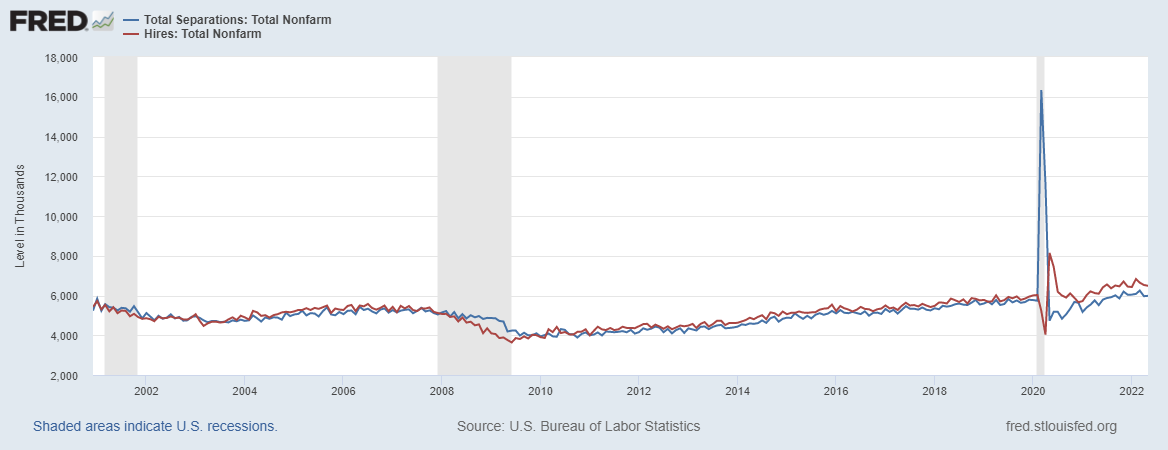
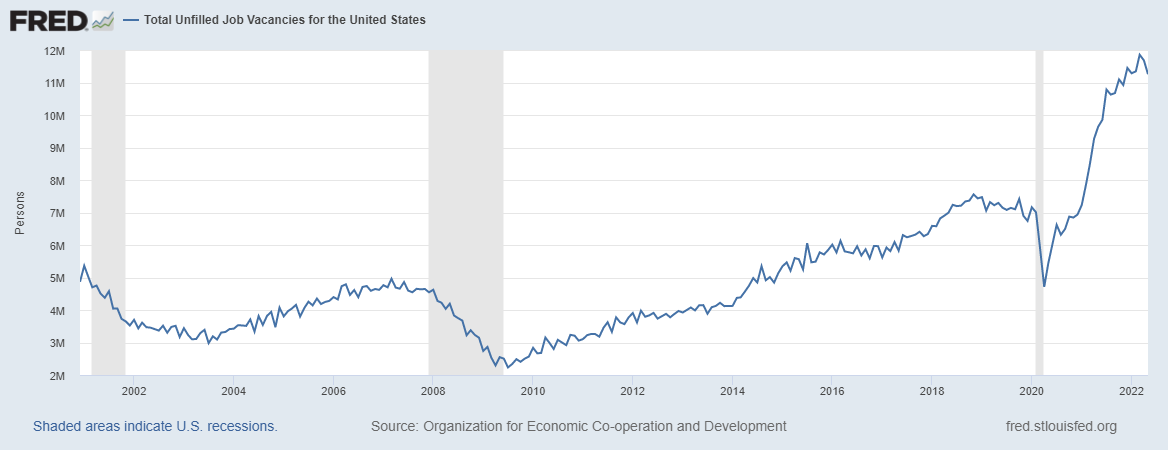
From my perspective, the story of employment consists of solely demand and supply, which can be further decomposed into 1) how many people are seeking work opportunities, 2) how many positions are waiting to be filled, and 3) how much friction is there causing mismatch, which leaves me a lot space to guess. As Fig 1 shows, in US (where relevant data are more accessible, that is why I take a glance at it) total hires usually overweighs separations in recent 10 years until COVID (2020, when people were fleeing from their position), and after that the gap has even widened——more job vacancies are waiting to be filled (see in Fig 2).
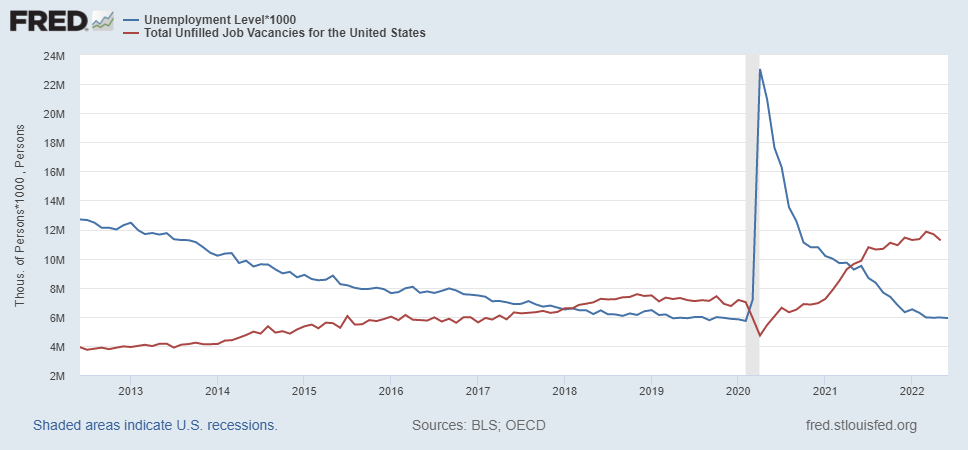
It is for sure that labor demand is greater than the supply——then to which extent can the mismatch come into play? As Fig 3 indicates that currently vacancies even outpaced the number of those unemployed, it must be plausible to stay at home without job given millions of opportunities (which maybe not attractive) to seize. People are "well prepared to be" unemployed under this circumstance.
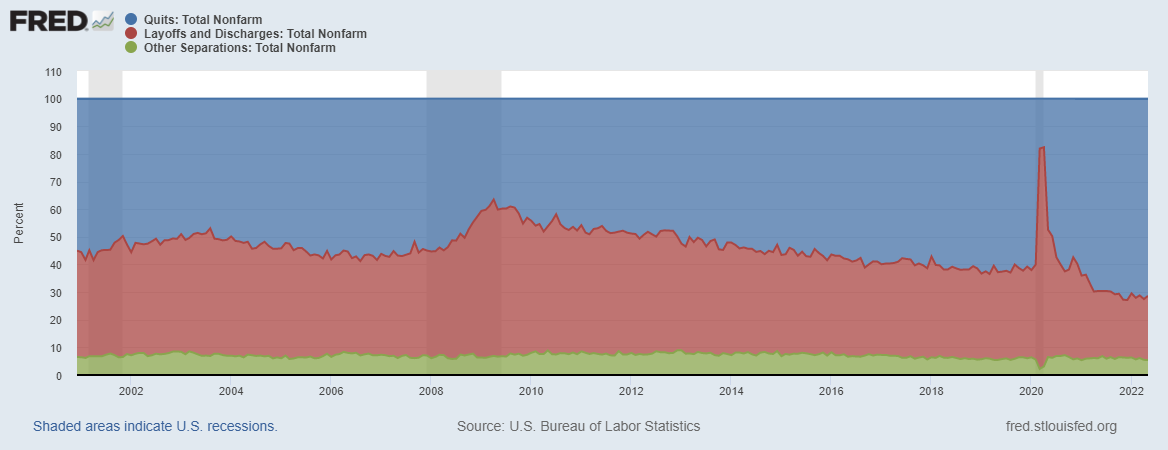
And the composition of total separation can further support the idea above: Layoffs, which occupies red area, has been eroded by Quits a lot since 2020. In other words, workers are leaving at their own will, and do not come back to fill past and new vacancies. Though companies, boasting their good EPS, are creating endless new positions, the response from modern slaves seems rather cold——roughly there are 1.9 jobs for each work to take.
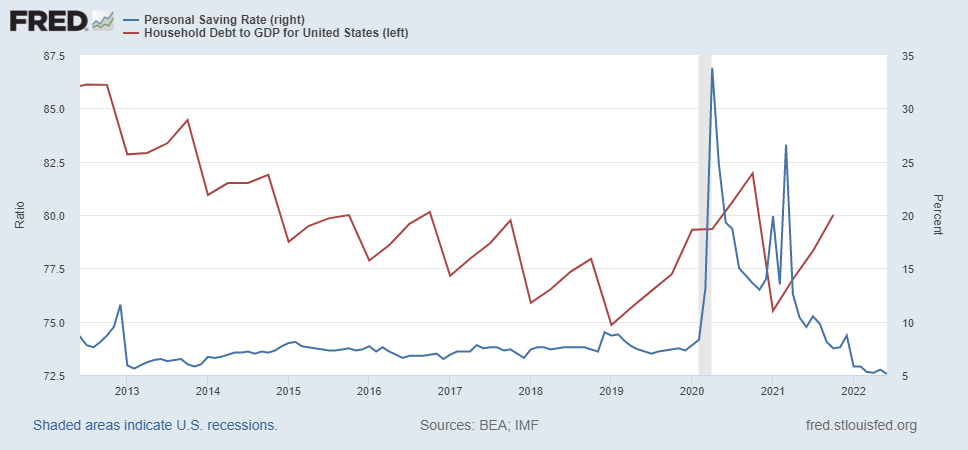
One research (to which I cannot get access now) mentions that although the market is tight, the growth of wage in potential job changes is very limited compared with intimidating inflation. So one scenario, saying workers are facing only the same or lower level positions than before, is quite convincing, given firms may willing to cover the rising cost in the first phase. As a result, those wage and salary works would rather stay at home, living on COVID cash subsidies and having fun.:happy: Personal saving rate used to peak during COVID and now are falling sharply with debt under recover (as Fig 5 shows).