How does BoE Measure Monetary and Financial Conditions?
Reference Article: Monetary Policy Summary, August 2022
Example 1: Gov Bond Yield
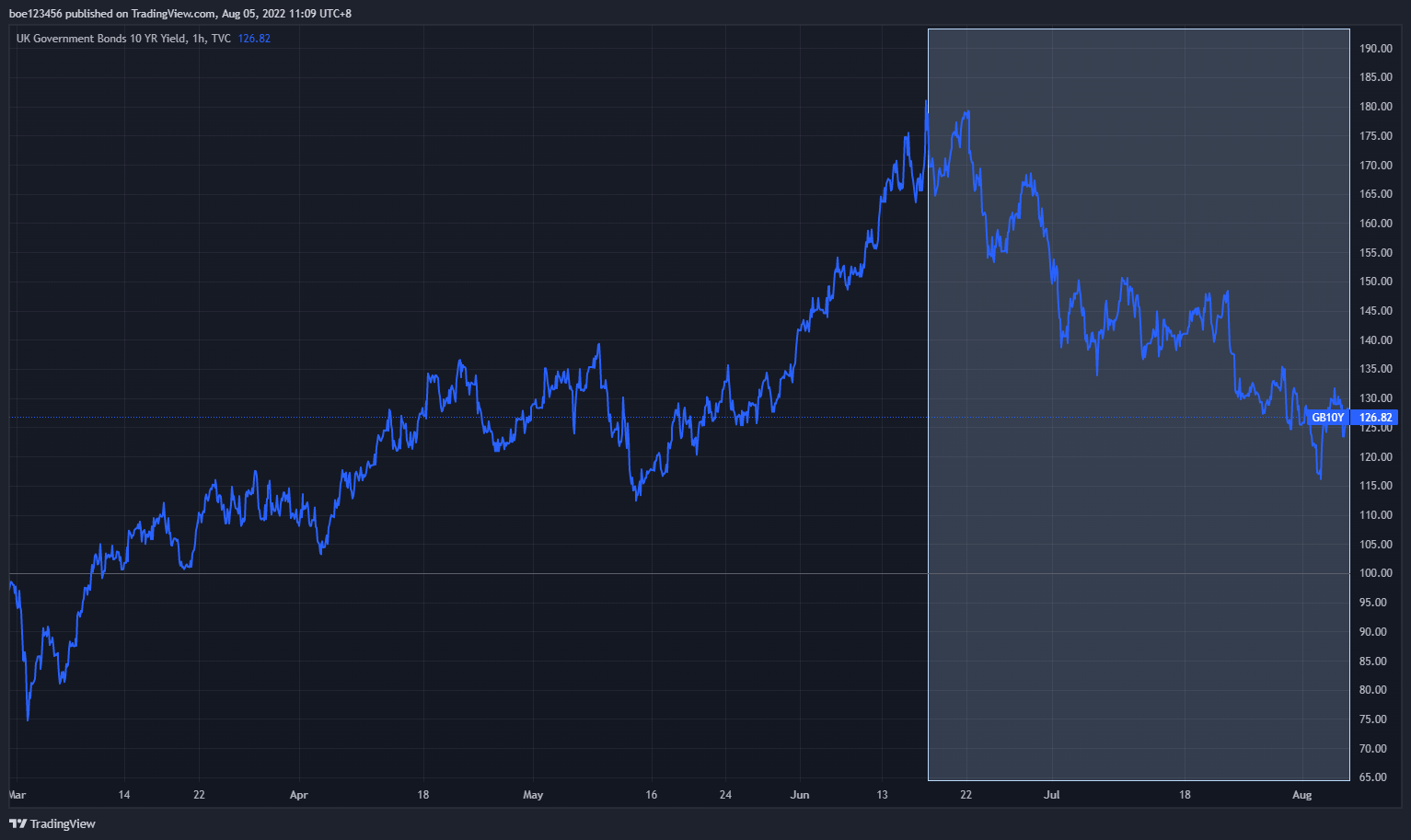
Ten-year government bond yields had fallen by around 70, 80 and 90 basis points in the United Kingdom, United States and Germany respectively since the MPC’s June meeting, more than reversing the increases seen between the May and June meetings. Risky asset prices had recovered, following large declines in equity prices and increases in corporate bond spreads between the MPC’s May and June meetings.
Firstly, UK 10Y GOV Bond Yields is mentioned. Why does this indicator matter, and what does it tell us? In addition to what its name suggests, as this type of bonds are backed by governments, they are seen as kind of safer assets.
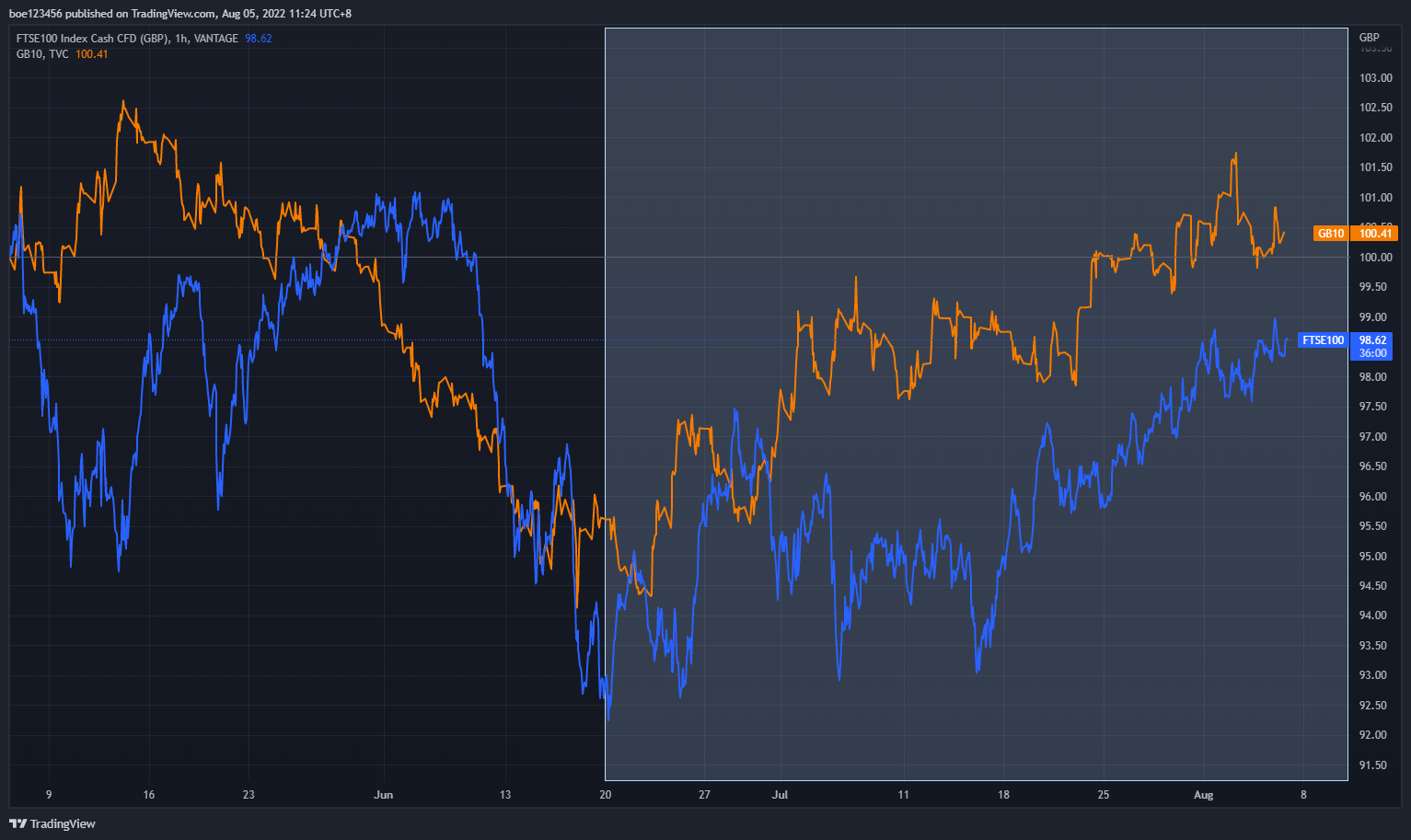
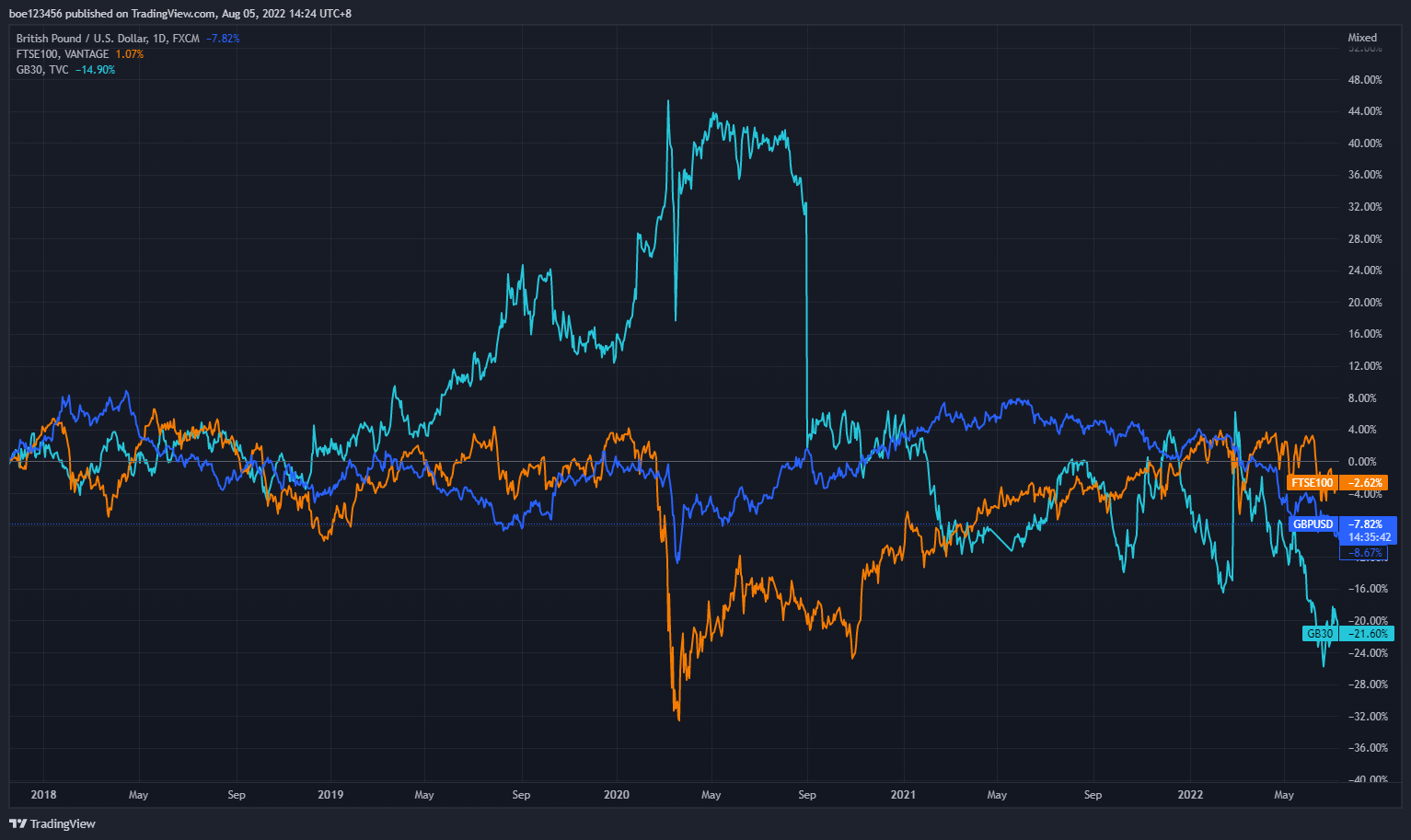
"Ten-year government bond yields had fallen..." equals "bond price had risen", implying that investors had been chasing it passionately given current risk aversion. That is to say, they were looking for a haven when storm was coming in. As shown in the second chart, since July 20, 2022, UK gov bonds has gained more than FTSE 100 has. That is why BoE remarks it as "Market participants now expected that central banks in major advanced economies would react more forcefully to near-term inflationary pressures, but could need to respond to weaker activity thereafter."
Example 2: Implied Interest Rate
Further out, market-implied expectations for the path of Bank Rate had fallen since the MPC’s previous meeting, now peaking at just under 3% in March 2023. This path continued to be higher than the expectations for Bank Rate of respondents to the latest MaPS, although the gap between the two paths had narrowed slightly, as the median respondent to MaPS now expected Bank Rate to peak at 2.5%, compared to 2% at the time of the MPC’s previous meeting.
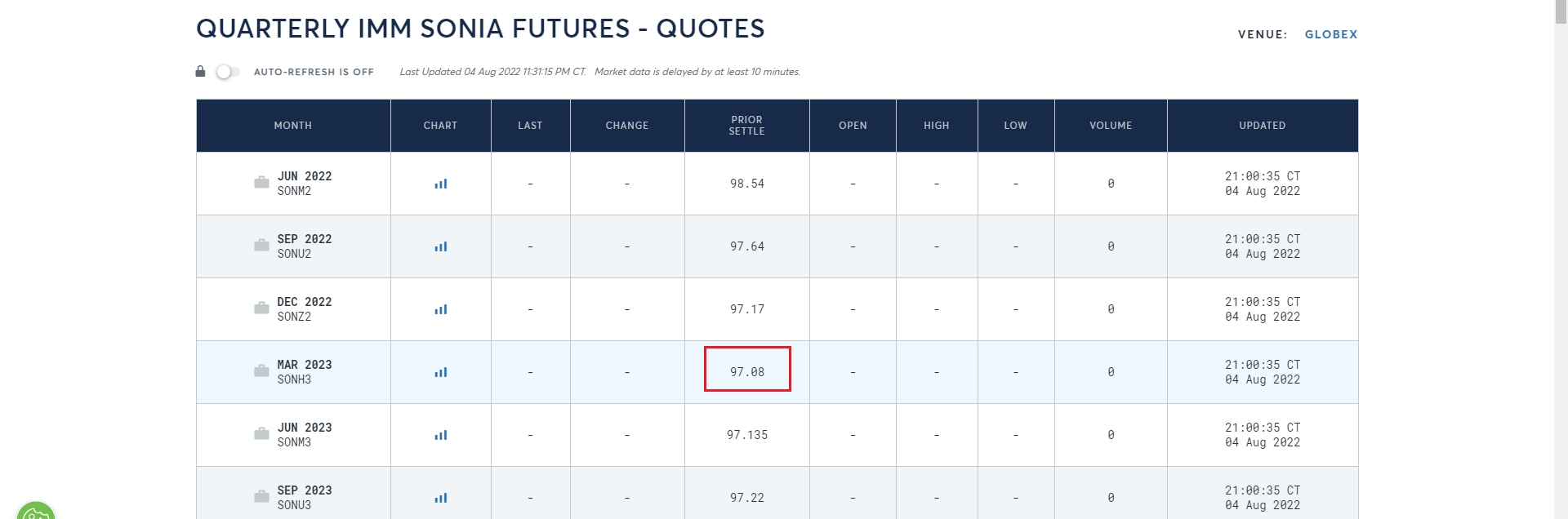
Here we meet a new jargon, market-implied expectation for bank rate. From my perspective this is no other than rate derived from real financial markets. To illustrate, I took a screenshot of Quarterly IMM SONIA Futures, which is a financial instrument trading on (100-future bank rate). As I framed, 97.08 reflects 2.92% bank rate expected in March 2023, consistent with the quoted information above ("just under 3%").
Meanwhile, there seemed to be different ideas from surveys on banks. According to Market Participant Survey (MaPS), the rate expected for March 2023 is far below 3%, as you can see below even the 75th percentile merely reaches 2.25%.
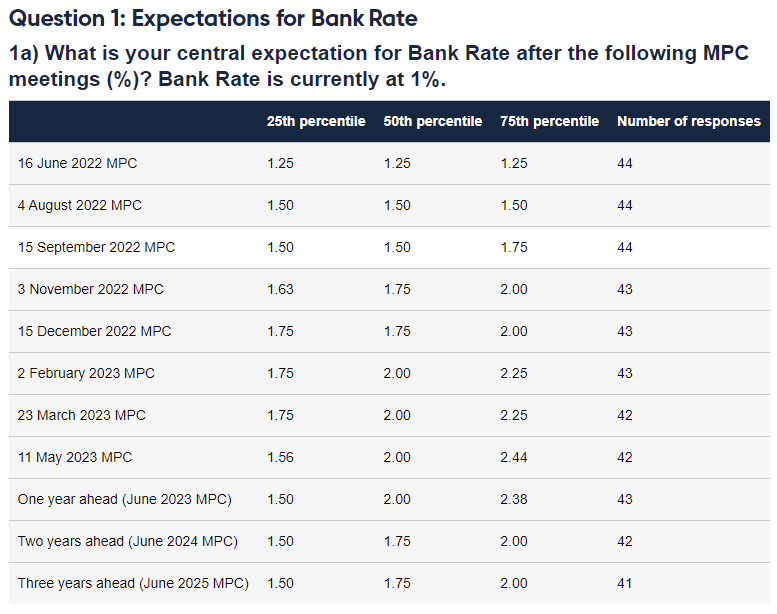
The gap between the market reality and main player's expectation is meaningful, leaving us a lot space to imagine under which scenario can it be narrowed or widened. Now market sentiment does not indicate the inflation will be tamed by then, while big players probably responded out of certain discretion.
Example 3: Exchange Rate
Based on the 15-working day average to 26 July on which the August Report had been conditioned, the sterling effective exchange rate was around 3% lower than the corresponding level at the time of the May Report. The depreciation of sterling against the US dollar had accounted for around 60% of this fall. Sterling had appreciated somewhat in the run-up to this MPC meeting.
Exchange rates always tell us a bunch a information altogether: relative confidence for the sovereignty, cost of financing, purchasing power, and price level, etc. Recent depreciation of Sterling is due to weakening economy outlook of UK (when compared with highlighted job market data of US); and slight appreciation came from the market-pricing for MPC meeting, which is likely to announce more fierce hike in the next step. (All in all, it's about demand and supply for this currency)
However, owing to high liquidity, it is rare to see large fluctuation in forex even when both bond and stock market over-reacted to the breakout of COVID. So personally speaking I feel it more like a short-medium-term arena for high-frequency arbitrage activities.
Example 4: Lending Rates
Lending rates for new fixed-rate mortgages in the United Kingdom had continued to increase materially, reflecting a further response to the increases in risk-free market rates that had been observed since autumn 2021.
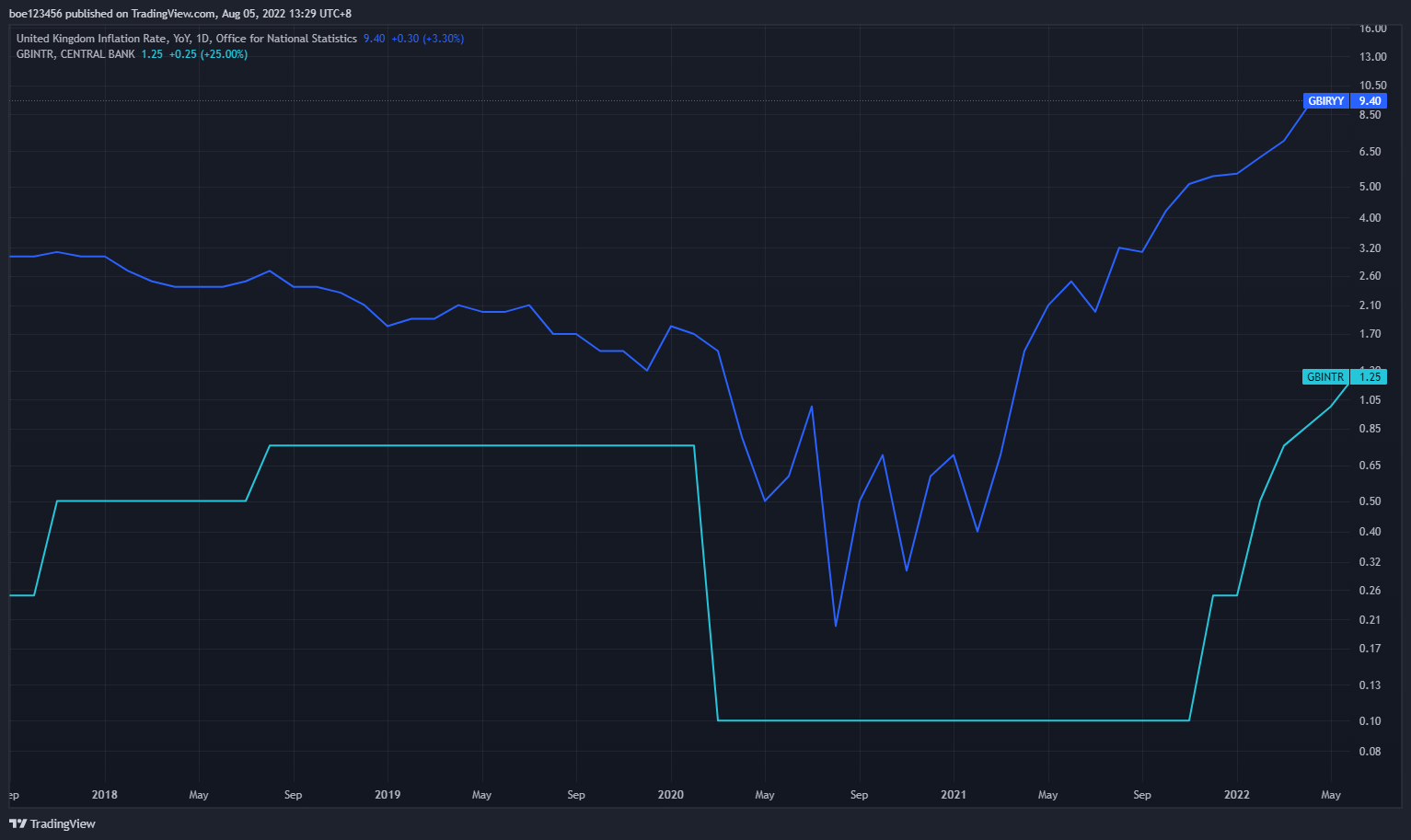
Lending rates is one aspect of credit conditions, and these rates are usually floored by upstream risk-free market rates (like inter-bank rates). It is a direct measure of households' financing cost, which will then affect their consumption and investment, as is shown in the 2nd chart below. With looming recession, UK families is now facing higher cost of debt owing to the shortage of fund supply.